StoryImmigration, Identity & Opportunity
Immigrants Aren’t the Only Ones Still Waiting on the American Dream
America has always sold the promise of a better life. The tension begins when people arriving for that promise meet people who have been waiting generations for it to reach them.
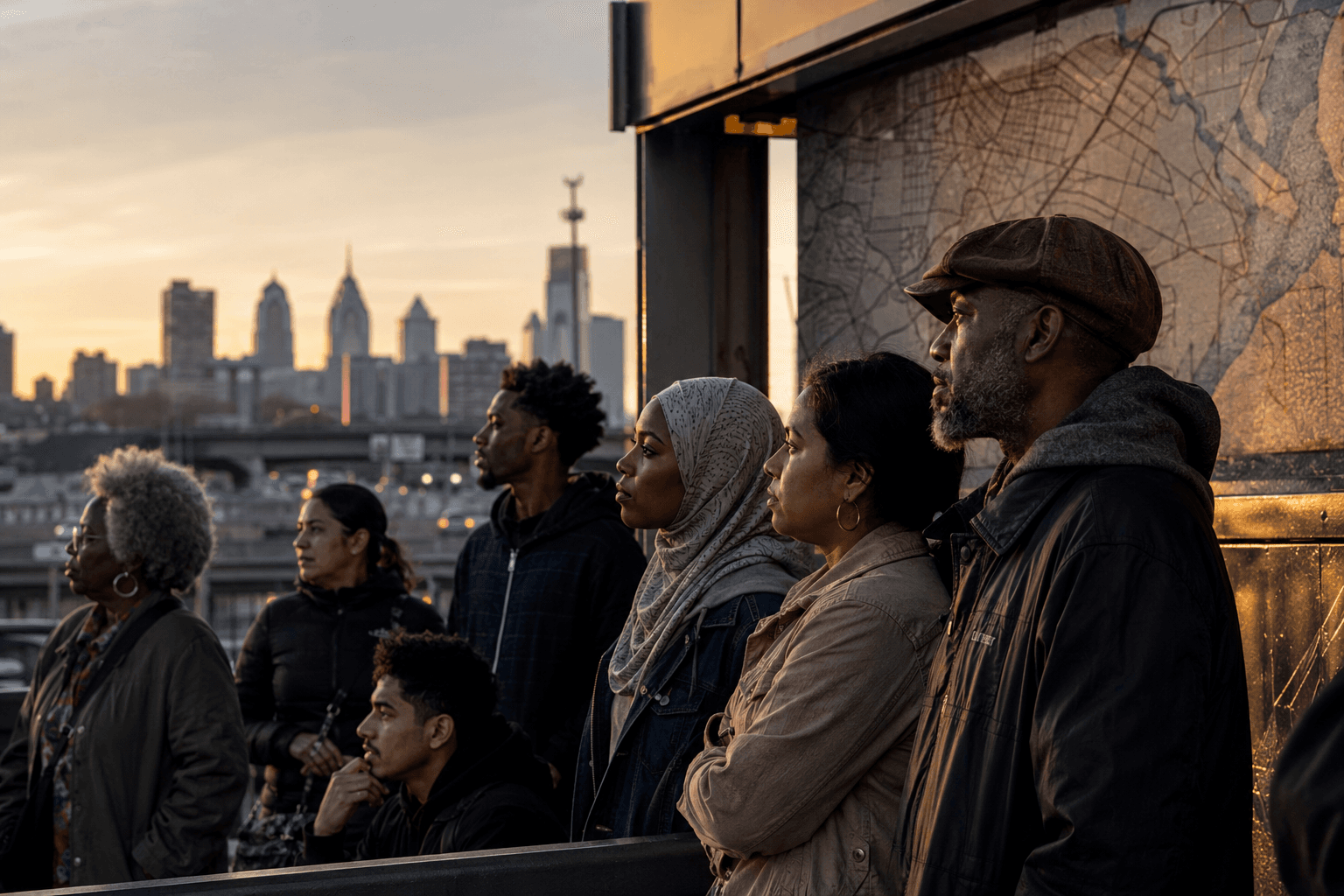
Someone arrives in America believing hard work can create a different future. Someone else was born here, works every day, and still cannot afford a home. One family is looking for safety while another has watched the schools in its neighborhood struggle for decades. One person crosses a border believing opportunity is on the other side, while another wonders why opportunity keeps getting farther away without ever leaving home.
These stories are often placed against each other. Immigrants are accused of taking jobs, housing, public resources, and opportunities from people already here. Americans frustrated by immigration are dismissed as simply hostile to outsiders. Black Americans can find themselves in an especially complicated position, watching the country mobilize around newly arriving communities while problems their own families have raised for generations remain unresolved.
But maybe the people arriving and the people still waiting are not each other's biggest problem. Maybe they are encountering different sides of the same promise.
The American Dream has a waiting room
Immigration debates become much more personal when opportunity already feels scarce. It is easier to celebrate population growth and cultural diversity when your rent is manageable, your neighborhood school is strong, your healthcare is accessible, and your job feels secure. It can feel different when affordable housing is disappearing, wages are stretched thin, classrooms are overcrowded, or public services already feel inadequate.
Those pressures are real, and pretending otherwise does not create a more compassionate immigration conversation. But scarcity can also encourage people to look sideways for someone to blame. The immigrant searching for work becomes the reason wages are low. The newly arrived family becomes the reason housing is expensive. The person receiving assistance becomes evidence that someone else has been forgotten.
Sometimes policy does create legitimate competition for limited resources. The harder question is why so many basic opportunities were scarce before the newest person arrived. If a community lacked affordable housing ten years ago, immigration did not create the original shortage. If wages have stagnated for decades while productivity and corporate wealth increased, the worker who arrived last year did not design that economy.
A crowded waiting room can make everyone angry at the person who just walked through the door.
Borders were never as natural as we pretend
Modern immigration conversations often treat borders as if they have always existed exactly where they are. History tells a messier story. Human beings migrated, traded, formed communities, married, fought, and moved across territories long before today's nation-states existed. Borders have been created and recreated through war, conquest, treaties, colonization, independence movements, and political negotiation.
Africa offers one of the clearest examples. During the late nineteenth-century colonial scramble for Africa, European powers negotiated claims over African territory with little meaningful participation from the people already living there. The Berlin Conference of 1884 and 1885 became a major symbol of that era, helping establish rules for European colonization and accelerating the partition of the continent.
The modern map of Africa was not simply drawn in one room at one conference, and today's 54 African countries have their own sovereign histories and national identities. But many inherited borders were deeply shaped by colonial rule. Lines divided communities, combined others under new governments, and often reflected European competition and extraction more than existing African political or cultural relationships.
That history should complicate the way we think about borders, not because borders no longer matter, but because they were never neutral.
Colonial powers crossed the world before telling everyone else where to stay
There is an uncomfortable contradiction buried inside the history of migration. Some of the powers that eventually became wealthy nations crossed oceans, occupied territory, extracted resources, moved labor, disrupted governments, and reorganized economies far beyond their own borders. Movement was acceptable when power was moving. Later, mobility became something increasingly regulated for everyone else.
That does not mean today's American immigration policy can be reduced to European colonialism. The United States has legitimate interests in knowing who enters the country, maintaining security, enforcing laws, and managing immigration in ways institutions can realistically support. But history still matters.
If wealth moved across borders through colonial extraction, global trade, slavery, resource ownership, and political power, it is worth asking why the movement of people is often discussed as though everyone began from an equal starting point. People do not migrate only because another country has better marketing. Sometimes they are moving through economic conditions shaped by histories much larger than themselves.
Black Americans and immigrants should not have to compete for whose struggle matters
This tension deserves particular attention because Black Americans can reasonably ask why institutions suddenly discover urgency around housing, employment, education, healthcare, or economic assistance when those same systems have failed Black communities for generations. That frustration should not automatically be treated as intolerance.
History matters here too. Black Americans are not simply another immigrant population that arrived seeking opportunity. The story includes enslavement, segregation, exclusion from wealth-building systems, discriminatory housing policy, unequal education, and generations of contributions to a country whose promises were often withheld from them.
But recognizing that history does not require treating immigrants as competitors. An immigrant arriving from Haiti, Mexico, Nigeria, Venezuela, India, Somalia, Guatemala, or somewhere else did not create America's racial wealth gap. They did not invent redlining. They did not underfund a neighborhood school. They did not decide which communities would receive investment and which would wait.
The frustration may be legitimate while the target is wrong.
The people fighting over opportunity may not be the people controlling it
Businesses can benefit from immigrant labor. Politicians can turn immigration into an election weapon. Wealthier communities can celebrate openness while remaining insulated from many of the pressures that come with rapid population change. Meanwhile, working-class people experience the argument at ground level.
That is where resentment becomes easy to manufacture. If two families are competing for one affordable apartment, they can become angry with each other while the owner benefiting from rising rents disappears from the conversation. If workers believe they are competing for wages, they may blame one another while overlooking the company with the power to determine compensation. If public schools lack resources, families may fight about who is filling the seats instead of asking why resources did not keep pace with the children who needed them.
Immigration can absolutely create real policy challenges. A serious country should be able to say that without dehumanizing immigrants. But a serious country should also be willing to ask who benefits when struggling people are encouraged to see one another as the source of their struggle.
Maybe the American Dream is too conditional
The American Dream has always contained a contradiction. It tells people around the world that this is a place where possibility is larger, while millions of people already here remain unconvinced that the promise applies equally to them.
That contradiction cannot be solved simply by opening the border, and it cannot be solved simply by closing it. A functioning immigration system matters. So does border security. So does human dignity. So does the reality of limited local resources. So does America's responsibility to people whose families have been waiting generations for promises that remain unfinished.
Those truths do not cancel one another. Perhaps the larger challenge is building a country where opportunity does not feel so scarce that somebody else's arrival automatically feels like your loss.
Because the person coming to America looking for a better life and the person already here wondering when life gets better may be asking versions of the same question: When does the promise become real for me?
A border can tell us where one country ends. It cannot tell us whose struggle matters more.
Your perspective
Stories like this are shaped by the people closest to them.
Membership is free. Contributors can follow a brief they shaped through its Perspective Trail once the story publishes.