StoryCulture & Identity
The Most Visible Black Influencers Aren’t Necessarily Leaders
Visibility can create influence overnight. Leadership is measured by what remains after the attention moves on.
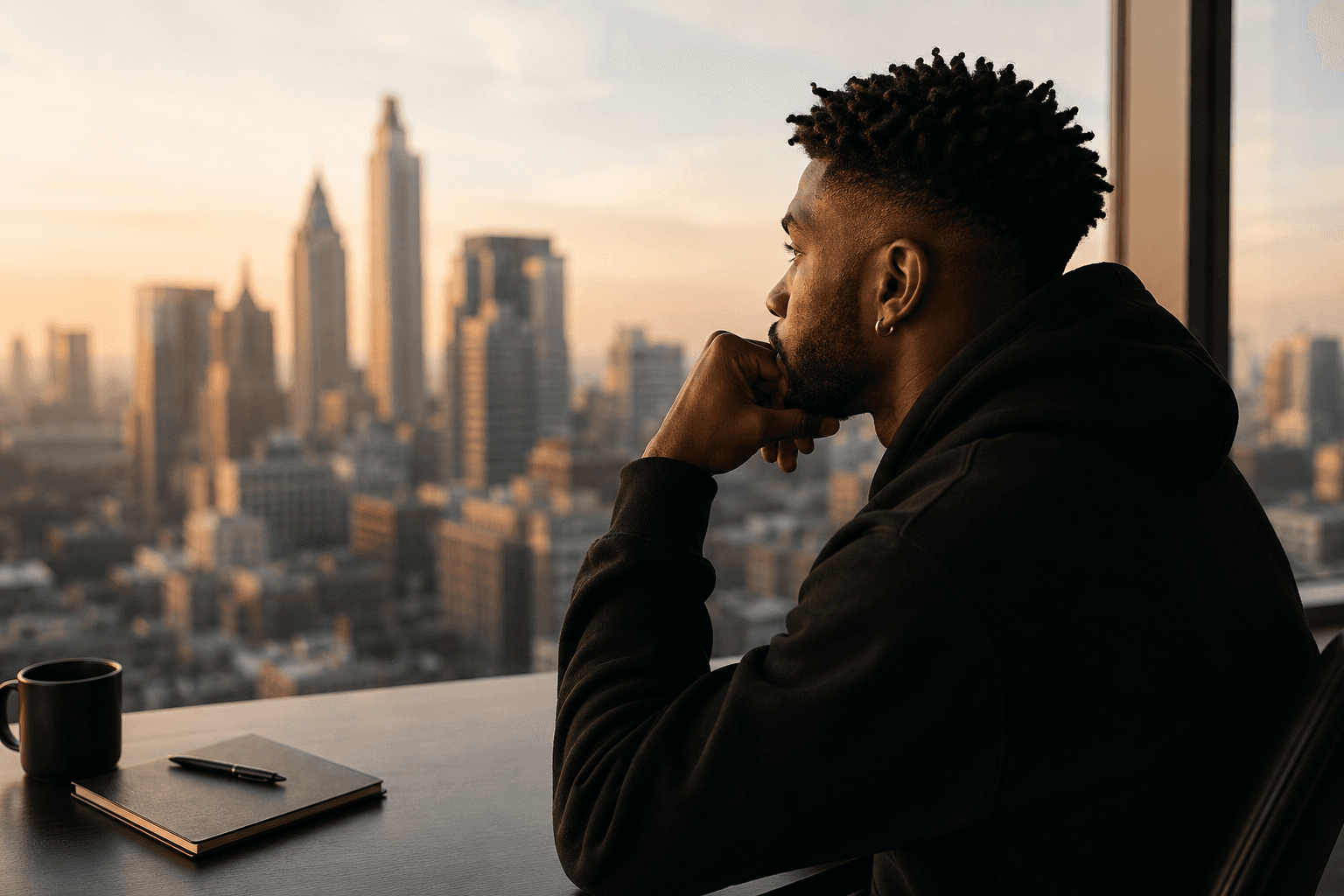
There was a time when the people broadly understood as Black leaders usually had a clear relationship to the people they were leading. They ran churches, organized neighborhoods, taught students, built businesses, registered voters, created institutions, challenged systems, and helped families navigate the realities directly in front of them. Some became nationally known, but much of that leadership happened locally and long before anyone outside the community knew their names.
Today, many of the most visible Black voices are entertainers, athletes, podcasters, creators, comedians, commentators, and entrepreneurs with enormous online audiences. Their influence is real. A creator can introduce a small Black-owned business to thousands of new customers. An athlete can push a health issue into the mainstream. A personality with a phone and an audience can sometimes force a conversation faster than a traditional institution ever could.
But visibility and leadership are not the same thing. The tension begins when the person with the biggest audience is automatically treated as the person most qualified to speak for everyone else.
Visibility is power, but it is not accountability
Attention carries enormous weight in modern culture. The people who dominate our timelines help shape what gets discussed, purchased, repeated, celebrated, criticized, and understood as culturally important. That makes influence meaningful even when the person holding it never intended to become a community leader.
The problem is that reach tells us very little about responsibility. A person can become one of the most recognizable voices associated with Black culture without having any real relationship to the people others assume they represent. Millions of followers can tell us how many people are watching. They cannot tell us whether those people trust that person, whether anything improves because of their influence, or whether they are accountable to anyone beyond themselves.
Leadership usually asks for something deeper. It involves some combination of service, credibility, consistency, responsibility, and outcomes. Did people gain access to something they did not have before? Did an institution change? Did someone become more capable? Did something remain after the public attention moved on?
Those are very different measures from views, followers, or engagement.
Maybe we keep appointing people to jobs they never asked for
There is another side to this conversation that matters just as much. Maybe the problem is not that entertainers and creators are failing to lead. Maybe the problem is that the rest of us keep assigning them a responsibility they never claimed.
A singer makes music. An actor makes films. An athlete competes. A comedian tells jokes. A creator creates content. Success in any of those fields does not automatically create expertise in education, economics, health, public policy, politics, or community development.
Yet when something significant happens, highly visible Black people are often expected to respond. Political campaigns want musicians. Media outlets want recognizable personalities. Brands want someone audiences already know. Social platforms reward whoever can react first and loudest.
That creates an impossible standard. Speak and risk being criticized for not knowing enough. Stay quiet and risk being criticized for not using your platform.
It is fair for someone to say, “I never asked to be your leader.” But influence still carries consequences, even when leadership was never the goal.
Influence can carry responsibility without becoming leadership
A person with a massive cultural platform can shape how people think about success, wealth, relationships, beauty, masculinity, femininity, family, violence, politics, and identity simply by being seen often enough.
That does not mean every rapper needs a social message or every creator needs to become an activist. Black people should have the same freedom as everyone else to be entertaining, funny, messy, excessive, aspirational, unserious, contradictory, and human.
The larger issue is what happens when entertainment becomes one of the dominant public representations of an entire culture.
Black life is much bigger than celebrity, music, sports, fashion, and internet culture, but those are often the parts most heavily amplified. When a narrow slice of Black life is repeatedly made visible, it can begin to stand in for the whole.
The question then becomes less about whether a single influencer is responsible for representing Black America and more about why so many other forms of Black life remain less visible.
The people building communities are not always the people building audiences
Consider a teacher who has spent fifteen years helping Black boys realize they are good at math. A business owner who intentionally hires people returning from incarceration. A neighborhood organizer who understands how local policy is affecting families block by block. A coach who has become a second father to generations of young men. A journalist who documents neighborhoods national media only notices during crisis.
Some of those people may have a few hundred followers. Some may have none.
Their lack of visibility says almost nothing about their impact.
The skills required to build an audience are not necessarily the same skills required to build a community. Digital platforms tend to reward frequency, personality, controversy, aesthetics, confidence, and entertainment. Community work often depends on patience, trust, listening, relationships, and the willingness to keep showing up when nobody is watching.
One produces attention. The other often produces infrastructure.
The problem begins when attention becomes the main way we decide whose work matters.
Leadership may already be everywhere. We just do not always see it.
Social media has made Black culture feel increasingly national. People in Dallas, Atlanta, Chicago, Oakland, Detroit, New York, Houston, Baltimore, and Los Angeles can all be discussing the same viral moment within hours. That creates connection, but it can also make national visibility feel more significant than local impact.
Most people's lives are still shaped much closer to home.
The person changing a neighborhood may be sitting through a school board meeting that never trends. They may be mentoring six teenagers, helping residents understand property taxes, building a small business, fighting a zoning decision, connecting someone with a job, or making sure families know what resources are available to them.
That work may never become content. It can still determine whether people thrive.
Perhaps Black communities do not have a leadership shortage. Perhaps we have a visibility problem.
Younger generations are also changing what leadership looks like
Traditional leadership has not always earned unquestioned trust. Younger Black Americans have watched politicians appear during election seasons and disappear afterward. They have seen respected institutions struggle to stay connected to changing realities. They have watched some leaders protect organizations, reputations, or proximity to power rather than the people they claim to serve.
So skepticism toward traditional leadership is not necessarily disrespect. Sometimes it is a demand for better leadership.
Digital culture has also removed barriers that once controlled who was allowed to speak publicly. A young organizer can reach thousands without the backing of a national organization. A historian can teach directly to an audience. A financial educator can build a platform around knowledge many families were never given access to. A local activist can document something before traditional media decides it matters.
Some of those people are influencers. Some are also leaders.
The categories are not mutually exclusive. What matters is what someone does with the visibility once they have it.
The better question is what remains after the attention moves on
Follower count is not enough. Fame is not enough. Wealth is not enough. A title is not enough either.
A more useful measure of leadership might be what changes because a person is present. Do other people become more capable? Does their work create opportunity beyond themselves? Have they built something that continues to help people when they are not in the room? Can the people they claim to serve challenge them? Do they create more followers, or do they help create more leaders?
Those questions produce a very different picture of leadership than a popularity ranking would.
They also remind us not to romanticize the idea of the “real leader.” Some traditional leaders have failed communities. Some celebrities have invested heavily in neighborhoods, funded scholarships, created jobs, changed policy, and used their platforms with extraordinary responsibility.
Occupation does not determine leadership. Behavior does.
Maybe influencers do not have too much visibility. Maybe everyone else has too little.
That may be the more useful conclusion.
The answer is not to demand that every famous Black person become an activist, scholar, organizer, or spokesperson. It may be more valuable to expand who else gets seen.
Media can widen the range of people it calls when explaining Black life. Brands can invest in community expertise rather than treating celebrity as the only form of cultural authority. Platforms can elevate educators, entrepreneurs, organizers, researchers, builders, and local experts. Communities can recognize the people doing meaningful work before national recognition tells us they matter.
That matters especially for younger people, because what we celebrate teaches them what success looks like. A teenager may know the earnings of ten rappers and never encounter a Black architect. They may follow dozens of lifestyle creators without seeing someone building affordable housing. They may understand personal branding before they understand ownership.
Entertainment does not have to carry the entire burden of correcting that. But culture teaches, and visibility shapes possibility.
Influence can make people pay attention to you. Leadership can leave people more capable after the attention is gone.
Black communities do not need fewer visible people. They need a broader understanding of whose visibility matters, what responsibility comes with influence, and how leadership should be recognized when it does not arrive with fame attached.
The question is not simply who has the biggest platform.
It is whether the people helping build the future are visible enough for us to notice.
Your perspective
Stories like this are shaped by the people closest to them.
Membership is free. Contributors can follow a brief they shaped through its Perspective Trail once the story publishes.